




Left: a natural tooth with its root. Right: a tooth replaced with an implant – the implant replaces the root and the abutment connects it to the crown.
A dental implant is a small titanium screw placed in the jawbone to replace the root of a missing tooth. Once it has fused with the bone, it provides a solid base for a crown, a bridge or a denture.
Like a natural root, the implant transmits chewing forces to the bone, which helps to preserve it.
When a tooth is not replaced, the bone that supported it gradually shrinks. The neighbouring teeth tend to tilt into the gap and the opposing tooth to over-erupt, which can make chewing harder and weaken the whole dentition.
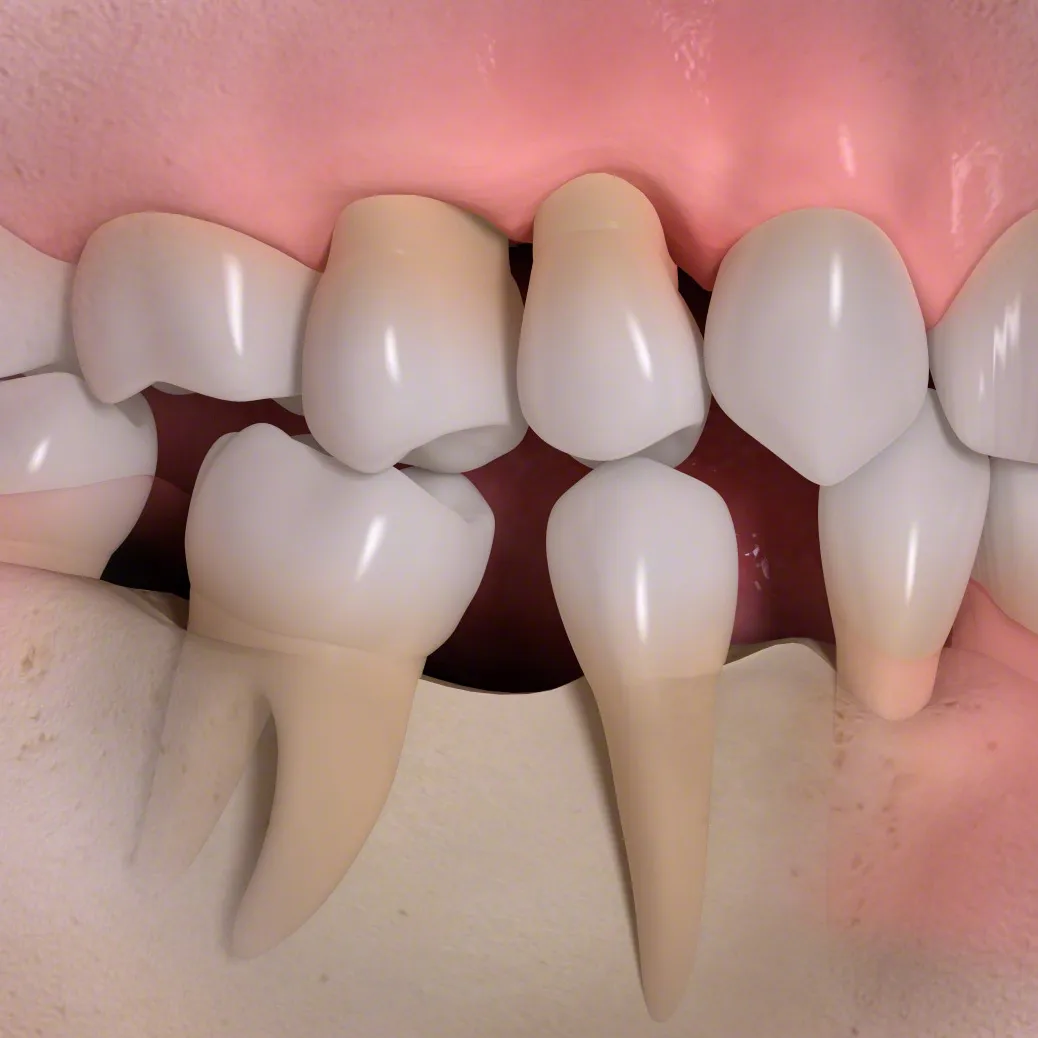
The bone shrinks and the neighbouring teeth drift into the gap.
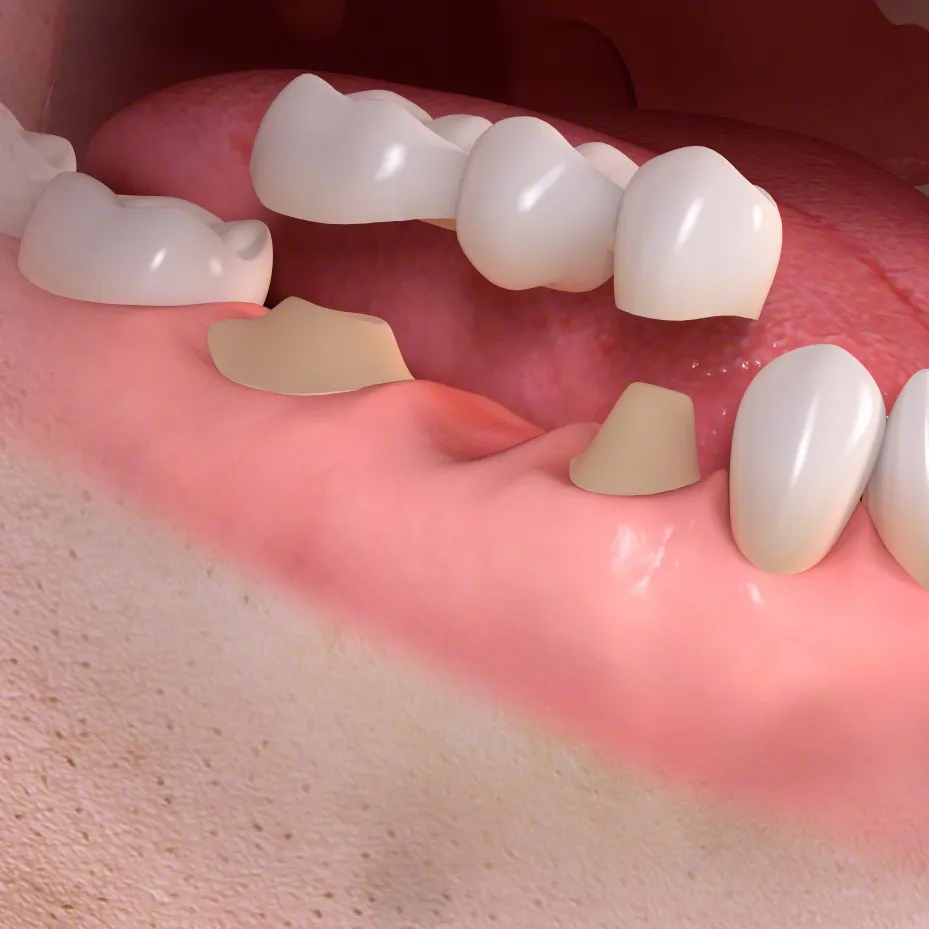
The neighbouring teeth have to be prepared (filed down) to be crowned. An implant replaces the tooth without touching them.
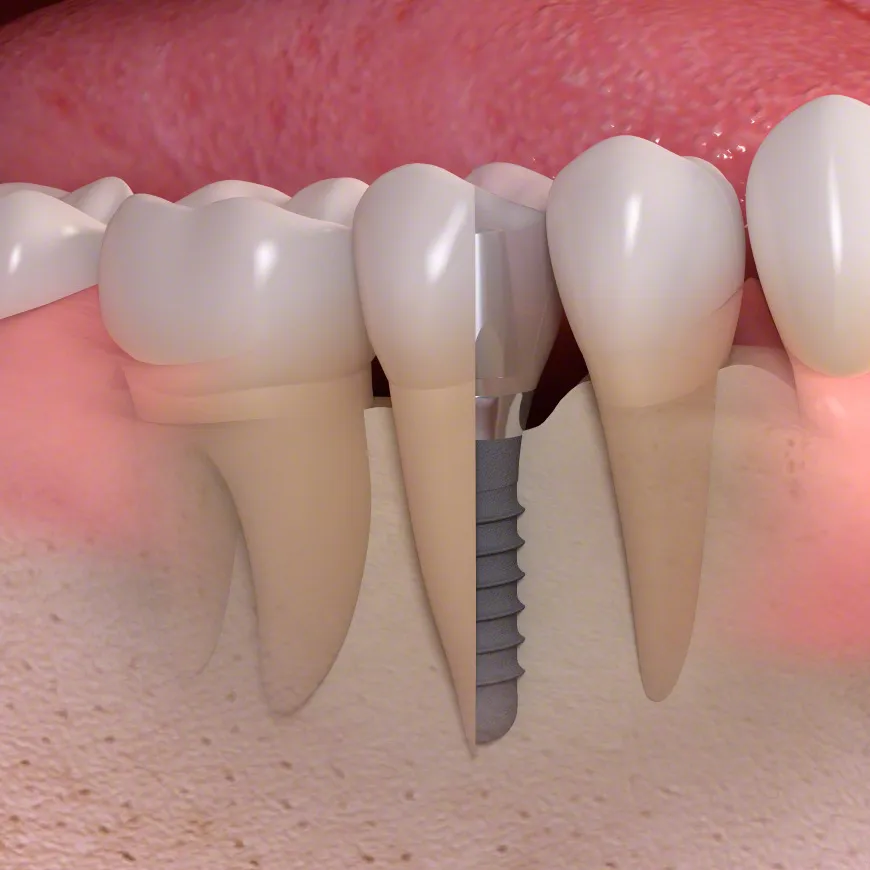
An implant and a ceramic crown replace the missing tooth, without touching the neighbouring teeth.
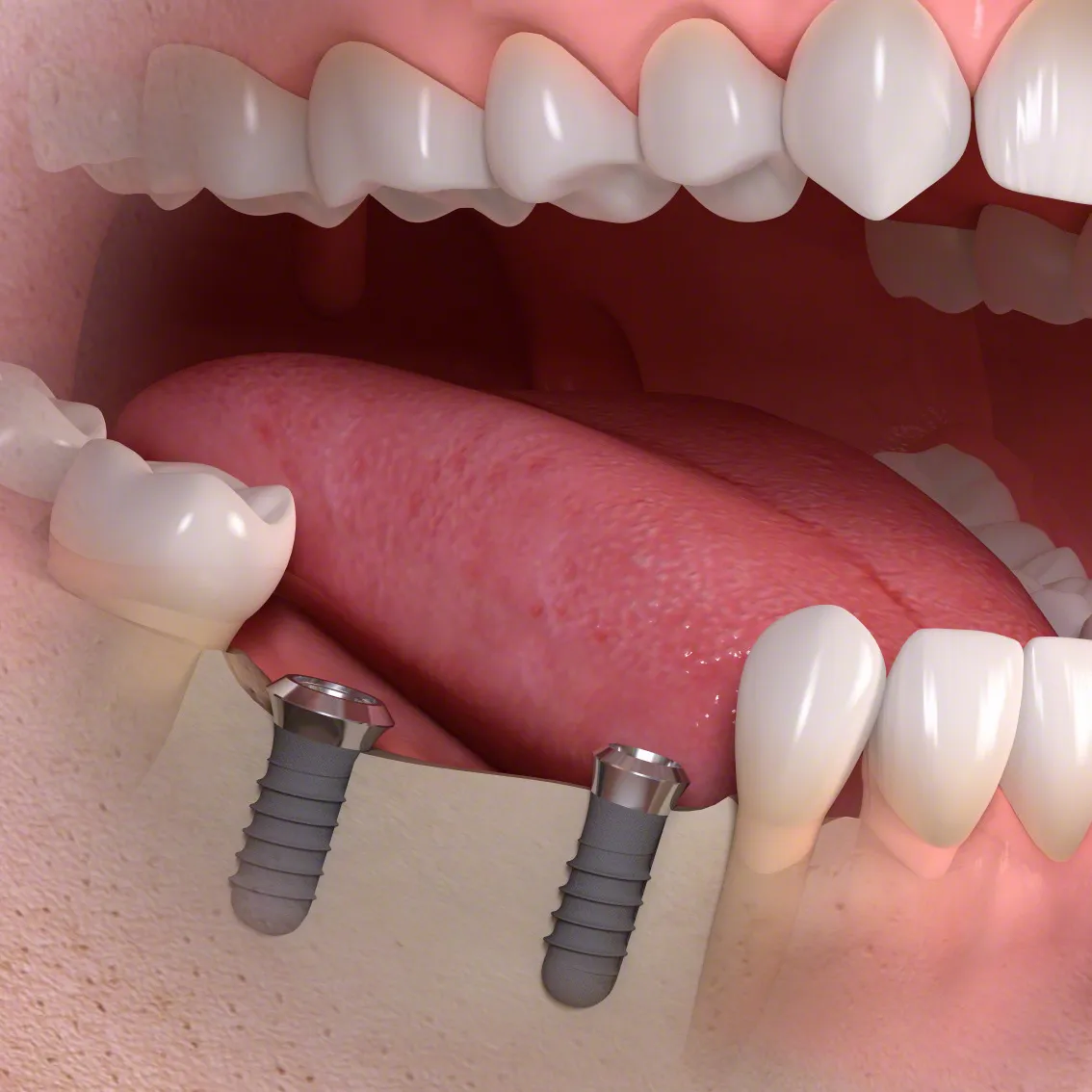
When several adjacent teeth are missing, two or more implants can support a bridge, so there is no need for one implant per tooth.
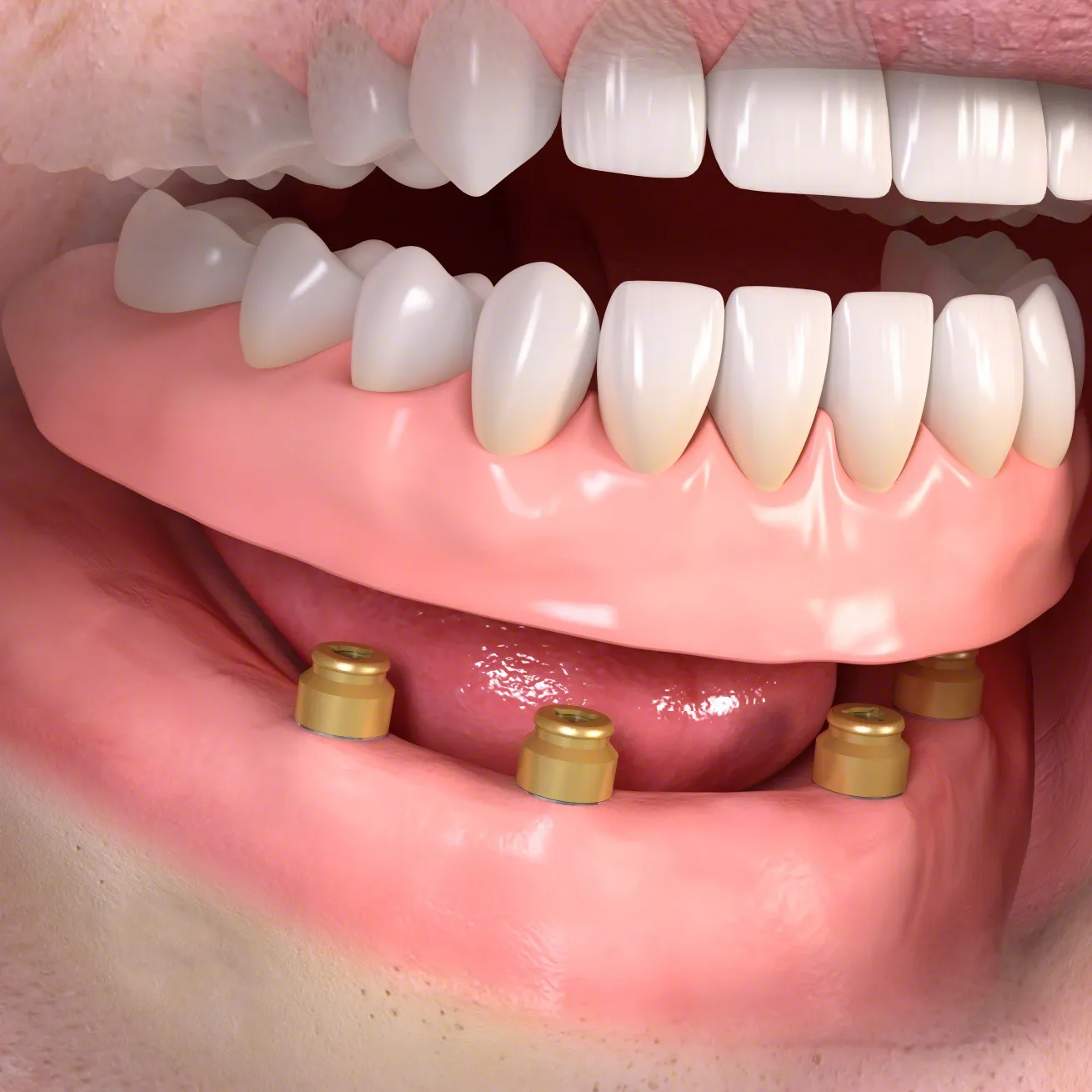
A few implants stabilise your removable denture with attachments. It stays in place much better when eating and speaking, and is easy to take out for cleaning.
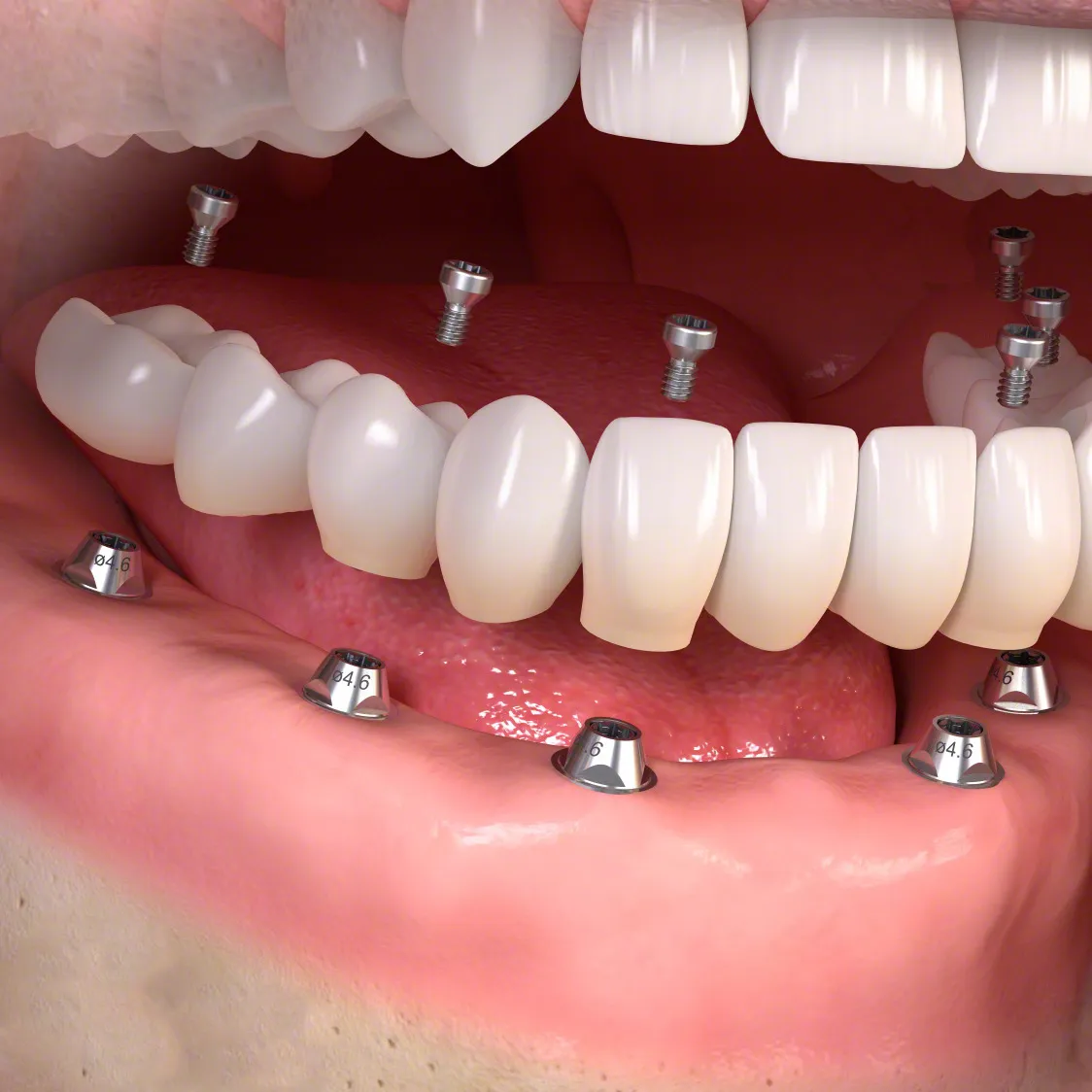
To replace all the teeth in a jaw, a full-arch bridge is screwed onto 4 to 6 implants. It is not removable: you get fixed teeth again.
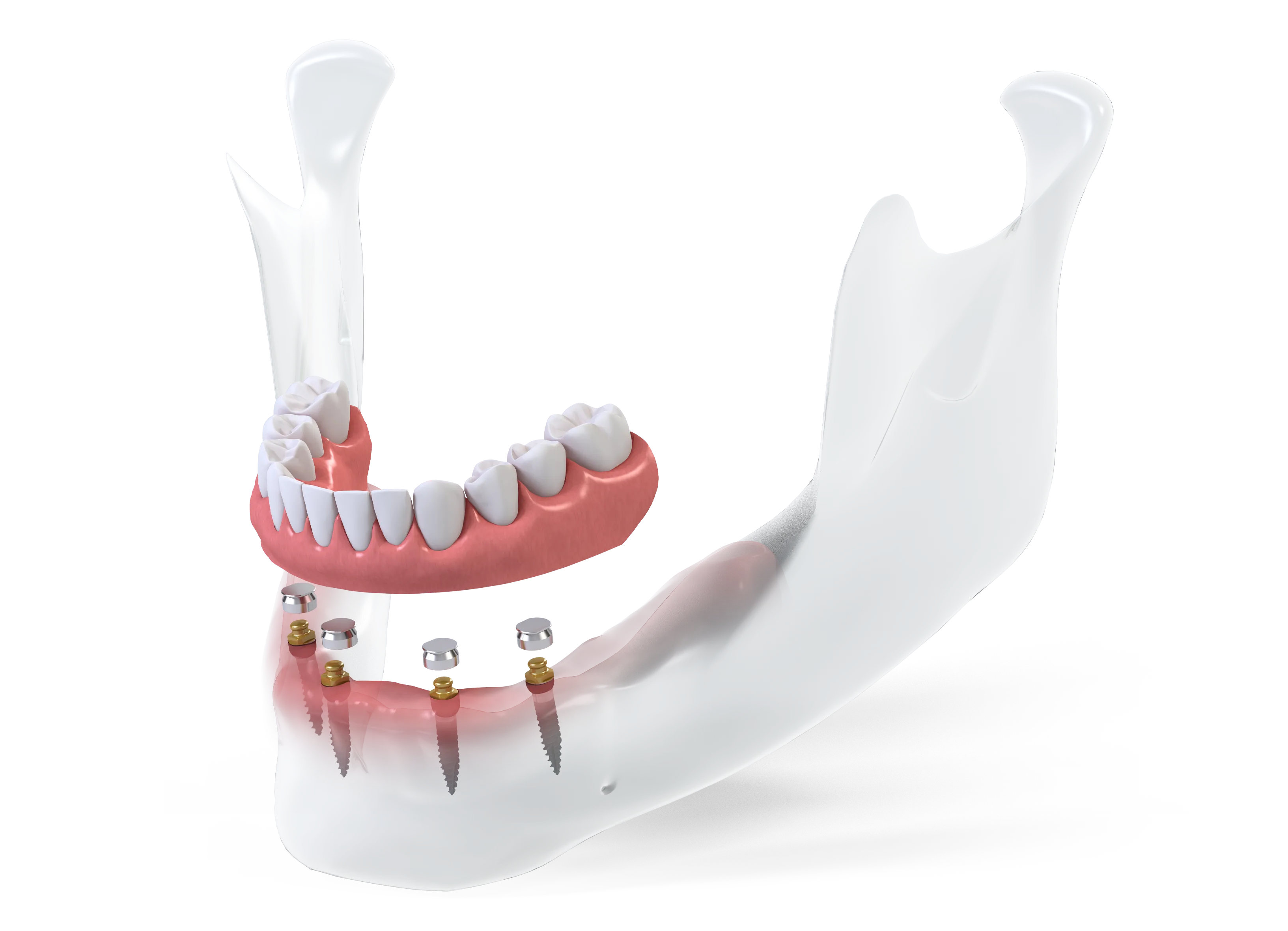
Mini implants are narrower-diameter implants designed to stabilise a removable denture. They are especially useful when the bone is narrow, often without the need for a bone graft.
The denture clips onto the mini implants: it no longer moves when you eat or speak, and is easy to remove for cleaning.
We work with two established implant manufacturers whose systems are backed by extensive clinical research:
Swiss manufacturer specialising in dental implantology for several decades.
An implant brand belonging to the Straumann Group, which complements our range depending on the clinical situation.
The choice of implant depends on your situation. We will explain the proposed solution at your consultation.
For complex cases, and whenever minimally invasive placement is possible, we use guided surgery:
CBCT: a 3D (cone beam) X-ray precisely measures the bone volume and locates structures to be protected, such as nerves and sinuses.
Digital planning: the ideal position of each implant is defined on the computer, taking the future crown into account.
Surgical guide: a custom-made template, produced from this plan, guides the drilling on the day of surgery.
When the situation allows, the implant is placed through the guide without opening the gum (“flapless” surgery). The procedure is shorter and recovery is usually easier.
Clinical examination and CBCT (3D X-ray) to assess the quantity and quality of the bone.
The implant is planned in 3D on the computer. For complex cases or minimally invasive placement, a custom surgical guide is made.
Under local anaesthetic, the implant is placed in the bone. The procedure is generally well tolerated.
The implant fuses with the bone over a few weeks to a few months. A temporary solution can be provided in the meantime.
The crown, bridge or denture is custom-made, often from a 3D digital impression.
Regular check-ups and hygiene appointments ensure your treatment lasts.
If there is not enough bone, a bone graft can be carried out before or during implant placement.
Implant placement is done under local anaesthetic. Afterwards, some moderate swelling and discomfort are possible for a few days; they are relieved with ordinary painkillers and cold packs.
Brush carefully twice a day and clean between your teeth with interdental brushes or suitable floss.
Attend regular check-ups and hygiene appointments, just as you would for natural teeth.
Smoking increases the risk of complications: stopping or cutting down is strongly recommended.
With good care, an implant can last for many years.
At a consultation, we assess your situation and present the options that suit you, with a detailed estimate.
Book an appointment