




Plaque that is not removed causes inflammation of the gum. Over time, plaque and tartar spread below the gum line: the bone supporting the tooth gradually breaks down and a “pocket” forms between the tooth and the gum.
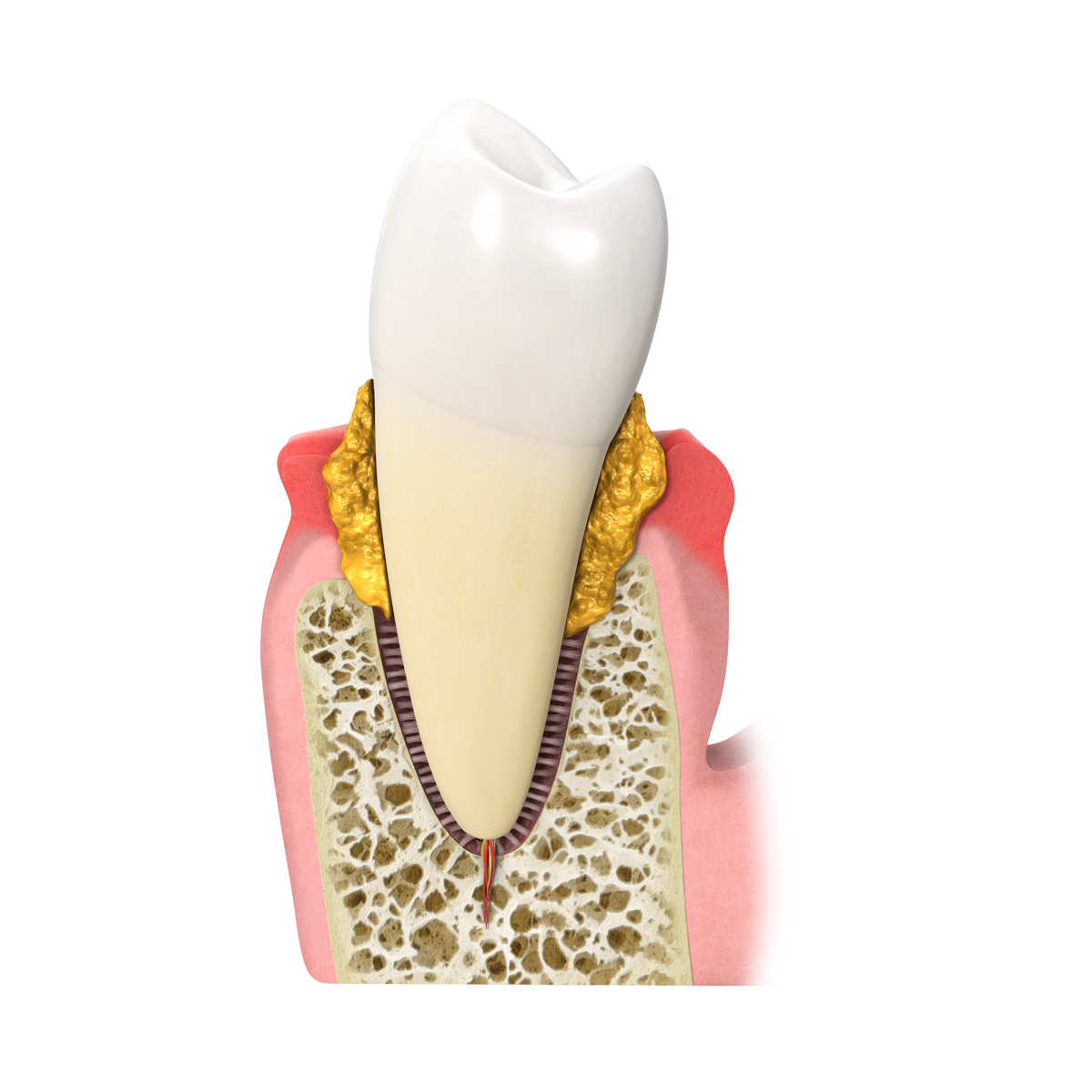
Periodontitis: tartar below the gum line and bone loss around the root.
Gingivitis: the inflammation affects only the gum. It can be reversed with professional cleaning and good oral hygiene.
Periodontitis: the infection reaches the bone and the fibres that hold the tooth. Without treatment, teeth can become loose, shift and eventually be lost.
gums that bleed when you brush;
red, swollen or tender gums;
persistent bad breath;
receding gums, teeth that look longer;
teeth that are loose or shifting.
Gum disease is often painless in its early stages: regular check-ups help detect it early.
It begins with a periodontal assessment: measuring the depth of the pockets around each tooth, and X-rays.
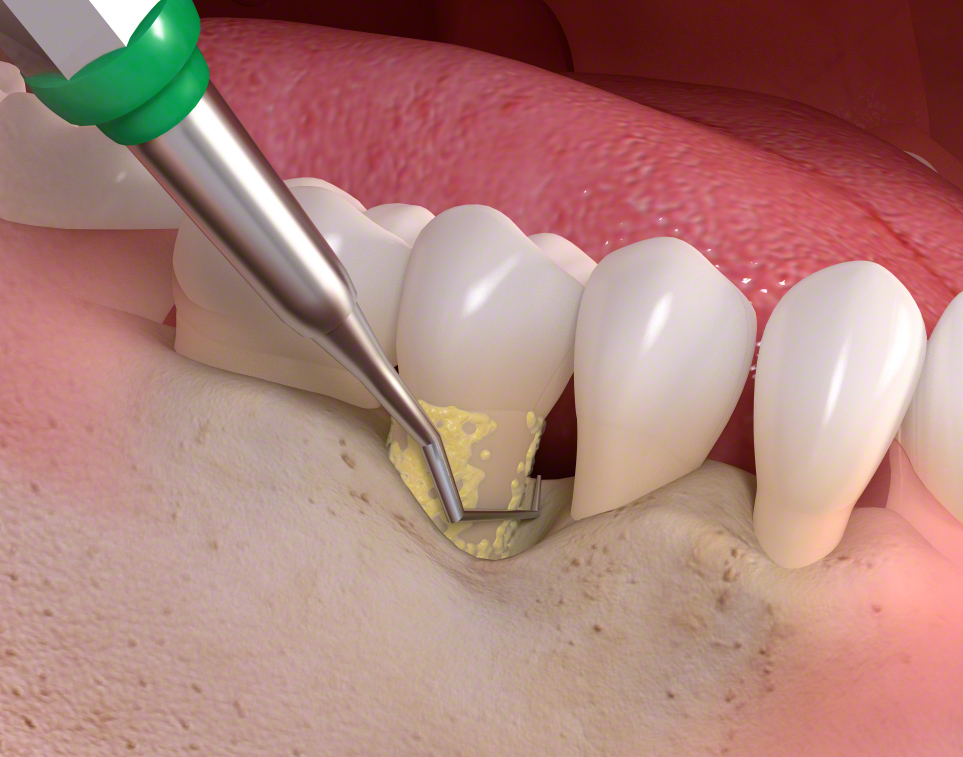
Under local anaesthesia, plaque and tartar are removed from below the gum line and the root surfaces are smoothed (root planing).
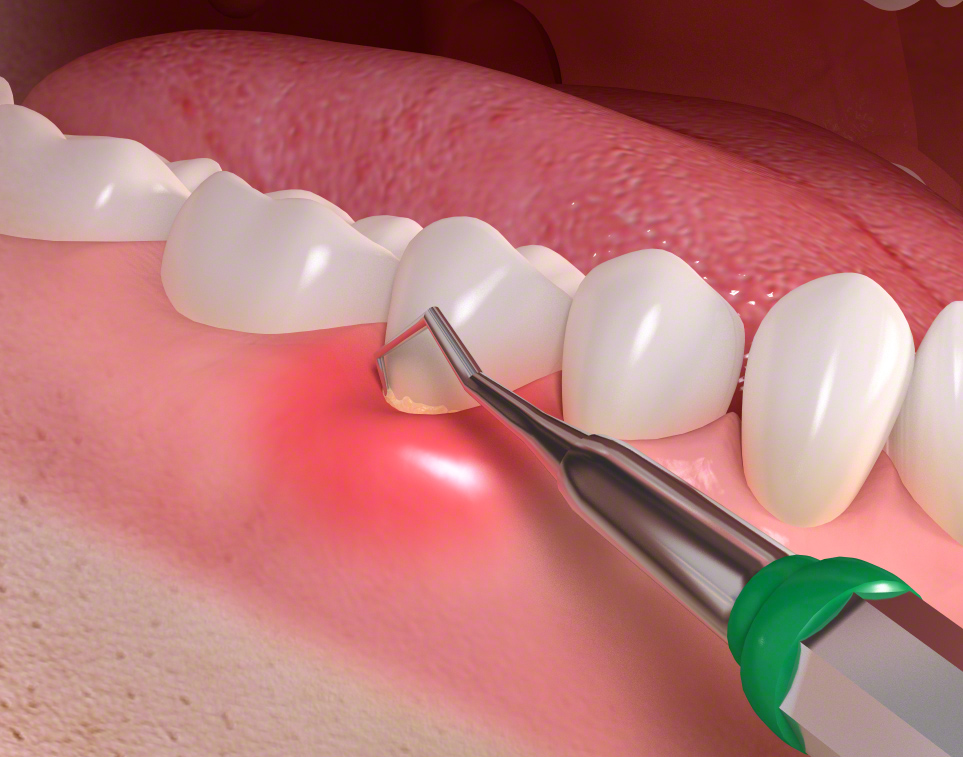
The laser complements the cleaning: it disinfects the pockets and supports gum healing.
A few weeks later, we reassess the gums. After that, regular maintenance sessions with the hygienist help keep the result stable over the long term.
When the gum recedes, the root becomes exposed: the tooth may become sensitive to cold and look longer. Depending on the situation, a gum graft can cover the root and protect it.
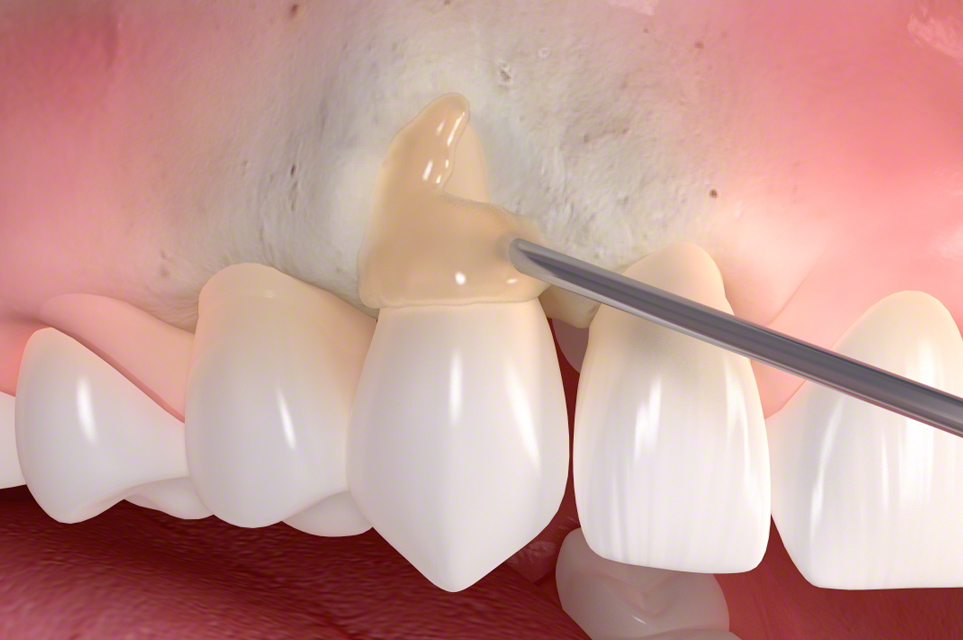
A small tissue graft is placed over the exposed root.
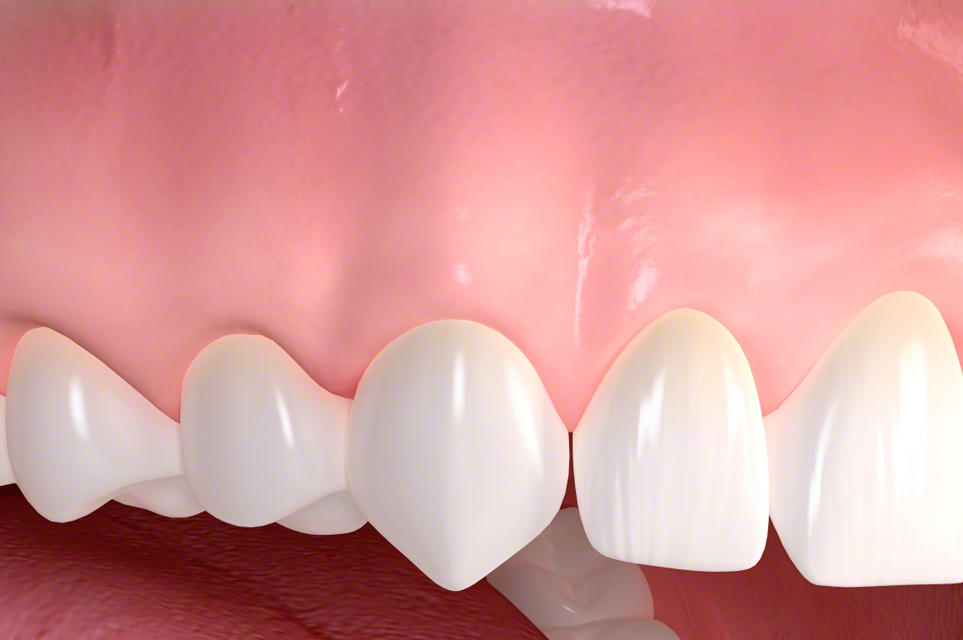
The gum covers the root again, protecting it.
brush your teeth twice a day, gently, along the gum line;
clean between your teeth every day with interdental brushes or floss;
come for regular check-ups and scale-and-polish appointments;
stop or cut down smoking, which promotes the disease and slows healing;
if you have diabetes, keeping your blood sugar well controlled also protects your gums.
Book a periodontal assessment: the earlier treatment starts, the simpler it is.
Book an appointment